

Purbacoreva: A tool for selecting a research topic

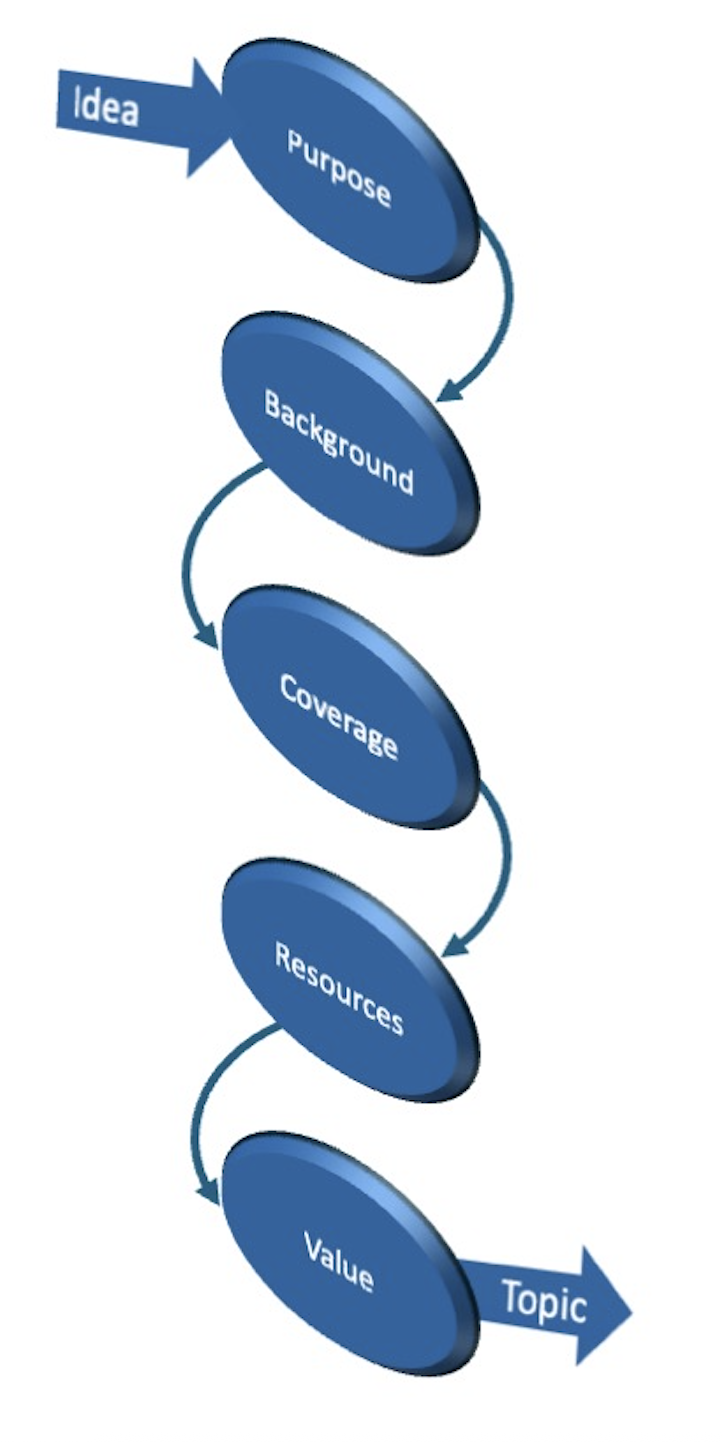
Purbacoreva – does it sound like a native word? Probably not.
Finding an appropriate topic for the dissertation can be difficult. Despite having many tools and supports, I could not find a comprehensive tool to help researchers make decisions effectively. This situation made me develop a topic selection tool called ‘Purbacoreva’. This is an organic tool, not in native English, but it does the job.
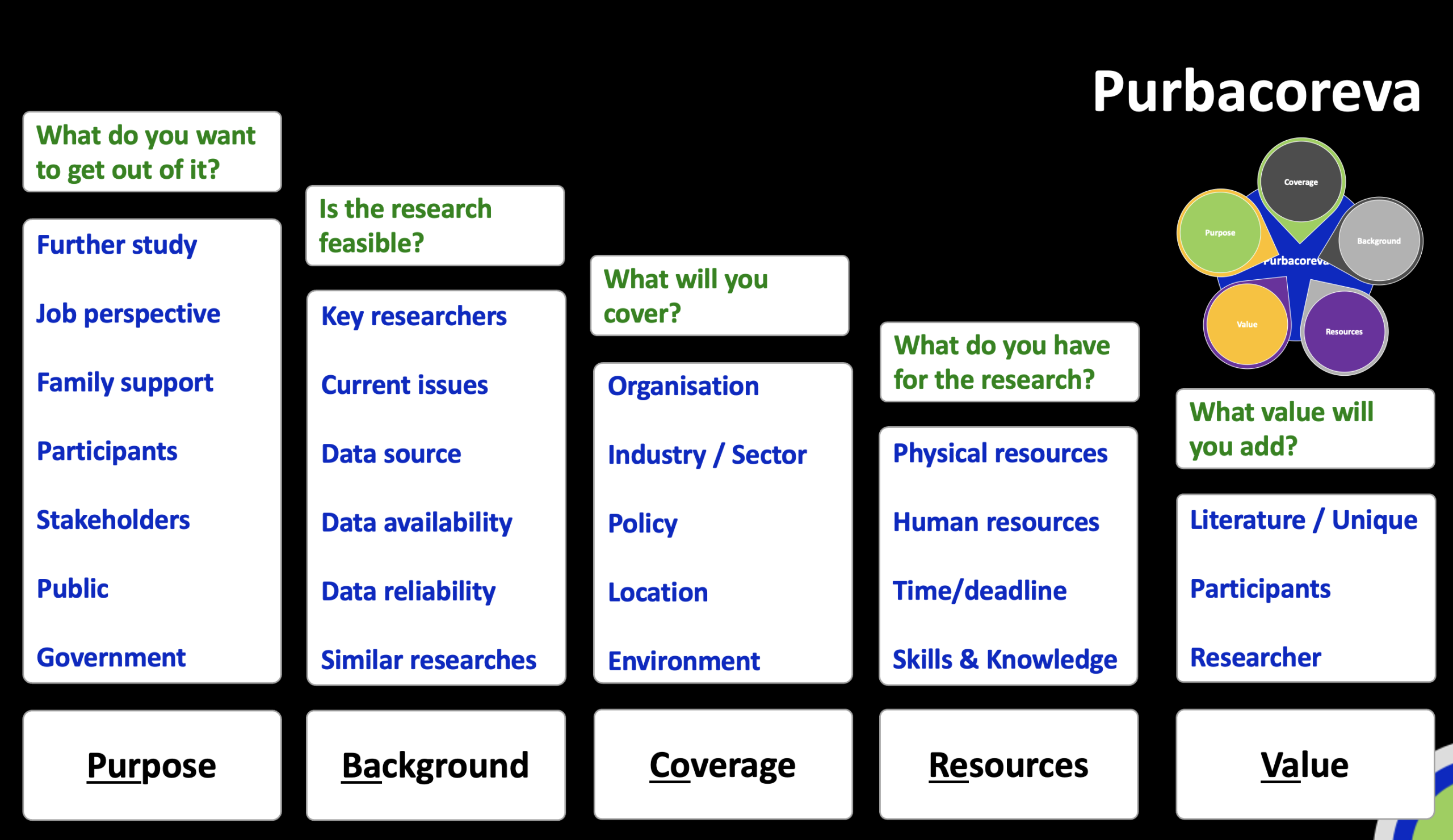
Purbacoreva has five components that any researcher should consider while choosing a research topic. Each parameter includes a fundamental question and a few points to consider, as discussed below:
Purpose of the research (Pur): You must be clear about what you want from the research. Therefore, you should consider the purpose of the research from multiple perspectives, such as further study, job perspective, family support, research participants, stakeholders, public support (community) and government plan.
Background search (Ba): After judging and analysing the purpose of the research, you should ask – whether the research is feasible to complete in the given time. To assess research viability (or feasibility), you need to look at the data from multiple aspects, including nature, source, availability and reliability. You must also find the key contributors, contributions and current debates on the potential research topic.
Coverage (Co) of the research area: What areas you want to cover are vital aspects of time-limited research projects like this. To ensure you have the appropriate level of coverage, you need to con sider several factors like organisation, industry/sector, policy, location and environment. By answering a question – what will I cover in this research project? – you can limit the research.
Resource availability (Re): It refers to the accessibility of resources to conduct any research. By answering the question – what resources do you have to complete the study? – you could make judgments of the resources you have and the objective you have set. The availability of resources includes physical resources, human resources, available time, skills and knowledge.
Value of the research (Va): The final question for selecting the topic is – what value will you add and/or create? If the research project does not add value to people, organisations or society, there is no point in doing the research. You may find the answer of value from different perspectives, such as the literature gap, uniqueness in methodology and participant involvement.
I have seen many novice researchers who choose a topic based on intuition, find it challenging afterwards, and drop the research project altogether. This tool should help them choose a research topic, make rational decisions, identity the purpose and become a successful researcher.
The Purbacoreva Table can be completed in one or multiple sittings. By following the steps below, complete the table and have a research topic for your dissertation.
- List five research topics that interest you.
- Score each criterion using a scale of 1 (least preferred) to 10 (best preferred).
- Add the score of each research topic.
- Rank the research topics.
- Choose the one that has the highest score.
Purbacoreva Table
| S No | Research Topic | PUR | BA | CO | RE | VA | Total | Rank |
| 1 | ||||||||
| 2 | ||||||||
| 3 | ||||||||
| 4 | ||||||||
| 5 |
Note: Pur = Purpose of research (clear purpose 10 – unclear purpose 1), Ba = Background research (clear understanding 10 – unclear understanding 1), Co = Research coverage (clear coverage 10 – unclear coverage 1), Re = Resource availability (availability 10 – unavailability 1), Va = Value of the research (high value 10 – least value 1).
If you use the tool to select a topic, I would not say you will have the best research topic, but I am sure it will be the most appropriate topic in the context.